
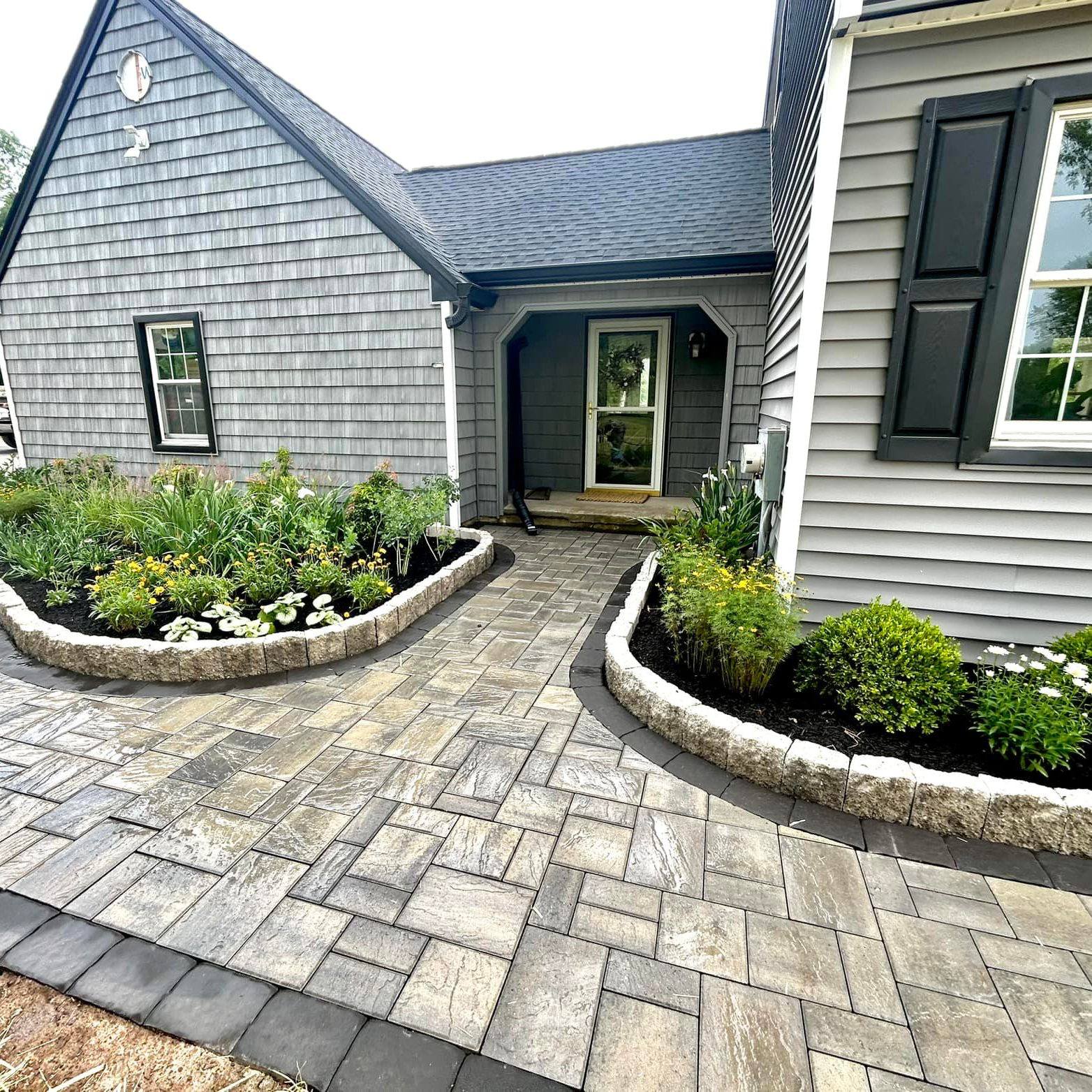
You've decided you want a patio. Great call. A well-built outdoor space adds real value to your home and gives you somewhere to actually enjoy your property. But now comes the question that trips up almost every homeowner: pavers or concrete?
Both are solid options. Both have real advantages. And both have situations where they're the wrong choice. We've installed hundreds of patios across Bucks County and Montgomery County, and we've seen what works and what doesn't. Here's the honest breakdown.
The Case for Paver Patios
Pavers are individual units, usually made from concrete, natural stone, or brick, that are set into a compacted base. Because they're not one solid slab, they flex with the ground. That matters a lot in Pennsylvania, where freeze-thaw cycles are brutal and the ground moves every single winter.
Concrete slabs crack. It's not a question of if, it's a question of when. Pavers, on the other hand, can shift slightly without cracking. And if one does get damaged, you replace that one unit. You're not patching a slab or living with an ugly crack running across your patio.
From a design standpoint, pavers give you options that concrete simply can't match. Running bond, herringbone, basket weave, circular patterns, mixed materials. You can create something that looks completely custom because it is.
Paver Advantages at a Glance
- Handles freeze-thaw cycles better than poured concrete
- Individual units can be replaced if damaged
- Huge variety of colors, textures, and patterns
- Permeable options available for drainage-conscious homeowners
- Adds more curb appeal and resale value
- Easier to repair without visible patching
The Case for Concrete
Concrete gets a bad reputation, but it's not without merit. A properly poured and reinforced concrete slab is durable, low-maintenance, and significantly less expensive upfront than a comparable paver installation. If budget is the primary concern, concrete is a legitimate option.
Stamped concrete has also come a long way. Modern stamping techniques can mimic the look of stone, brick, or slate at a lower price point than the real thing. It's not the same as actual pavers, but it can look sharp if done well.
Concrete is also faster to install. For a large area where budget and timeline matter more than design flexibility, it can be the right call.
Concrete Advantages at a Glance
- Lower upfront cost per square foot
- Faster installation timeline
- Low maintenance once cured
- Stamped options offer design variety
- Good for large, simple areas
- Familiar material with predictable results
The Real Cost Comparison
Here's where most homeowners get surprised. Pavers cost more upfront, typically 20 to 40 percent more than a basic concrete slab. But the long-term math often flips that equation.
Concrete slabs in Pennsylvania almost always crack within 5 to 10 years due to ground movement. Repairing a cracked slab is either expensive or ugly, and sometimes both. Pavers, maintained properly, can last 25 to 30 years without major issues.
Think of it this way: pavers are a 30-year investment. Concrete is a 10-year investment that you'll likely need to revisit. Over time, the total cost of ownership often favors pavers, especially in a climate like ours.
What About Maintenance?
Concrete is largely set-it-and-forget-it, aside from sealing every few years and dealing with cracks when they appear. Pavers require occasional re-sanding of the joints and sealing, but neither task is particularly demanding.
Weeds can grow in paver joints if they're not properly sealed, which is a common complaint. But with polymeric sand and a quality sealer, that's a non-issue. We always recommend sealing within the first year and every 3 to 5 years after that.
So Which Should You Choose?
If you're building a patio you want to be proud of for the next 20 years, pavers are almost always the better choice. The design flexibility, durability, and repairability make them worth the extra upfront investment.
If you're working with a tight budget and need a functional outdoor space quickly, concrete is a reasonable option. Just go in with realistic expectations about longevity.
And if you're still not sure, that's exactly what we're here for. We offer 2D and 3D virtual renderings so you can see both options on your actual property before committing to either. It takes the guesswork out of the decision completely.
Let's Design Your Patio Together
Free estimates and 3D renderings available. Serving Bucks County and Montgomery County, PA.
Get a Free Quote